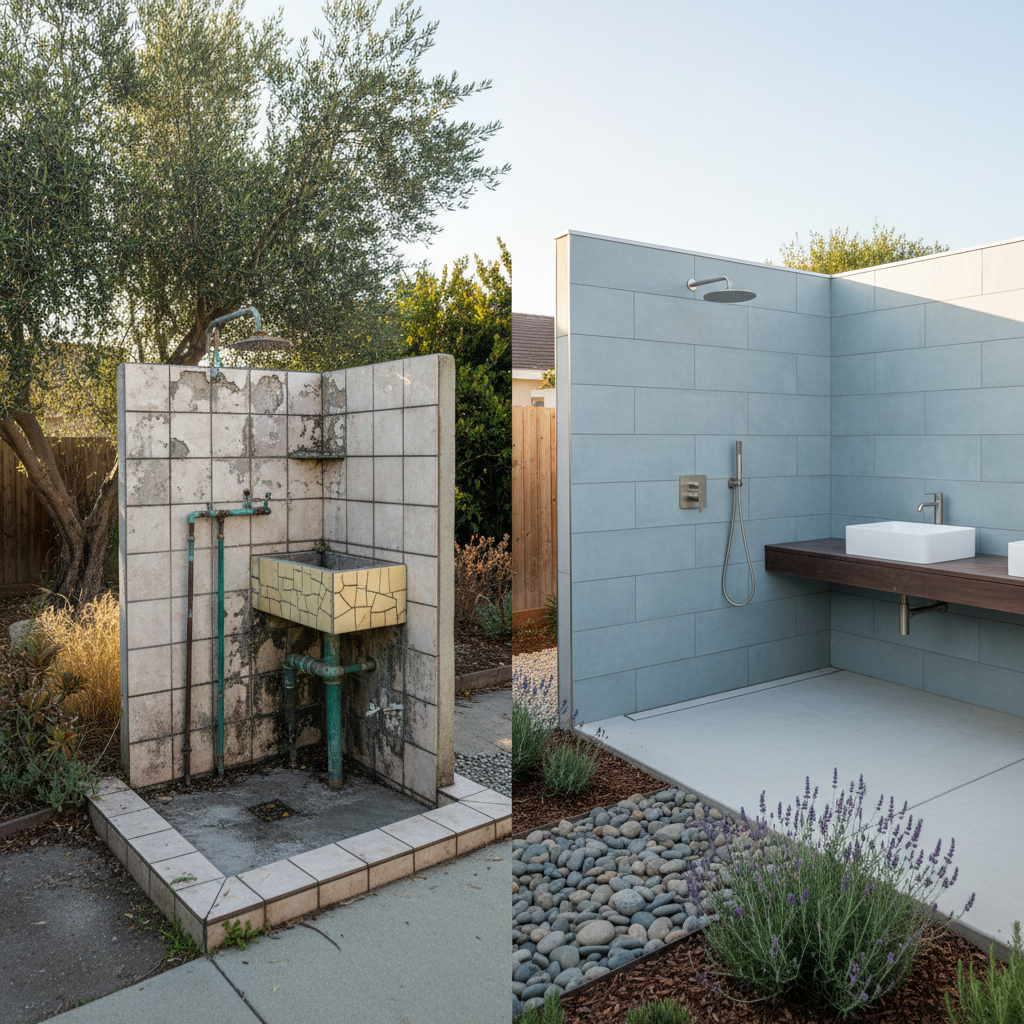
So, you've got a leak. Or maybe your water pressure's gone from a decent stream to a sad little trickle. Whatever the plumbing headache, you're probably asking yourself a big question: Do I just fix the problem pipe, or do I go all-in and repipe the whole house?
It's a really common dilemma, and honestly, I see it a lot here in Brea. Especially with some of the older homes up around the hills near Carbon Canyon, where original galvanized pipes are definitely showing their age. There's no single right answer for everyone, but I can tell you what I've picked up from years in this business.
Spot Repair: The Quick Fix
Let's talk about spot repairs first. This is pretty straightforward: you find the leaking pipe, cut out the bad section, and replace it. It's usually the cheapest option upfront, and it gets your water flowing again quickly. If you have just one, isolated leak in an otherwise healthy system, a spot repair totally makes sense. Say a nail accidentally punctured a pipe when someone was hanging a picture, or a fitting just gave out. We can usually get in there, fix it, and you're good to go.
The cost for a spot repair is generally much lower than a full repipe, often just a few hundred to a couple of thousand dollars. It really depends on how easy it is to get to and how bad the damage is. Durability? Well, the part we fix will be new, but the rest of your old piping system is still... old. You shouldn't have much maintenance on the new section, but you might find yourself calling me back in a few months for another leak somewhere else. Appearance isn't really a factor here, since we're usually just patching up a small area behind a wall or under a sink, right?
Whole-Home Repiping: The Long-Term Solution
Now, let's look at repiping your entire home. This is a much bigger project. We're talking about replacing all those old, corroded pipes – usually galvanized steel or old copper – with new, modern materials like PEX or new copper. It's disruptive, no doubt about it. We'll be cutting into walls, floors, and ceilings to get to those old lines.
The upfront cost is significantly higher than a spot repair. For a typical Brea home, you're probably looking at anywhere from $8,000 to $20,000 or more, depending on your house's size, the number of fixtures, and the material you choose. It's a big investment, but here's why it's often the smarter move in the long run.
Durability is where repiping truly shines. You're getting a brand-new plumbing system designed to last for decades. No more worrying about the next pinhole leak popping up. Your water pressure will be consistently strong, and your water quality will likely improve, especially if you're replacing galvanized pipes that can leach rust into your water. Maintenance drops dramatically; you won't be calling a plumber every few months for new leaks.
Appearance-wise, the work happens behind the walls, so once we patch and paint, you won't see anything different. What you will notice is consistent hot water, better shower pressure, and a general feeling of relief. Plus, a repiped home is a definite selling point if you ever decide to move.
My Honest Recommendation for Brea Homeowners
If you're dealing with multiple leaks, low water pressure throughout the house, or discolored water – especially if your home was built before the 1970s and still has its original galvanized pipes – a whole-home repipe is almost always the better choice. I know it's a bigger hit to the wallet upfront, but it stops the cycle of endless, expensive spot repairs. You're not just fixing a problem; you're upgrading your home's infrastructure for the next 50 years.
Think about it like this: if your car's tires are bald, you don't just replace one. You replace them all for safety and performance. Your home's plumbing is similar. If the system is failing in one spot, it's likely failing in others. For a significant investment like a bathroom remodel, which Brea Bathroom Solutions handles, you definitely want to ensure the pipes behind those beautiful new tiles are solid and reliable. You don't want to finish a gorgeous new shower only to find a pipe burst behind it a year later.
If you've got a relatively new home, say built in the last 20-30 years, and you've got one isolated leak, a spot repair might be perfectly fine. But for those older homes, particularly with the hard water conditions we sometimes deal with around here, those old pipes are just ticking time bombs. Get ahead of it. It'll save you headaches and money down the road.